Is Sleeping in a Car Warmer Than a Tent? Usually Not
Both leak heat. An unheated car measured 2 to 24F above outside air; a tent adds about 5F. Glass and steel make the tent warmer unless it is windy or wet.
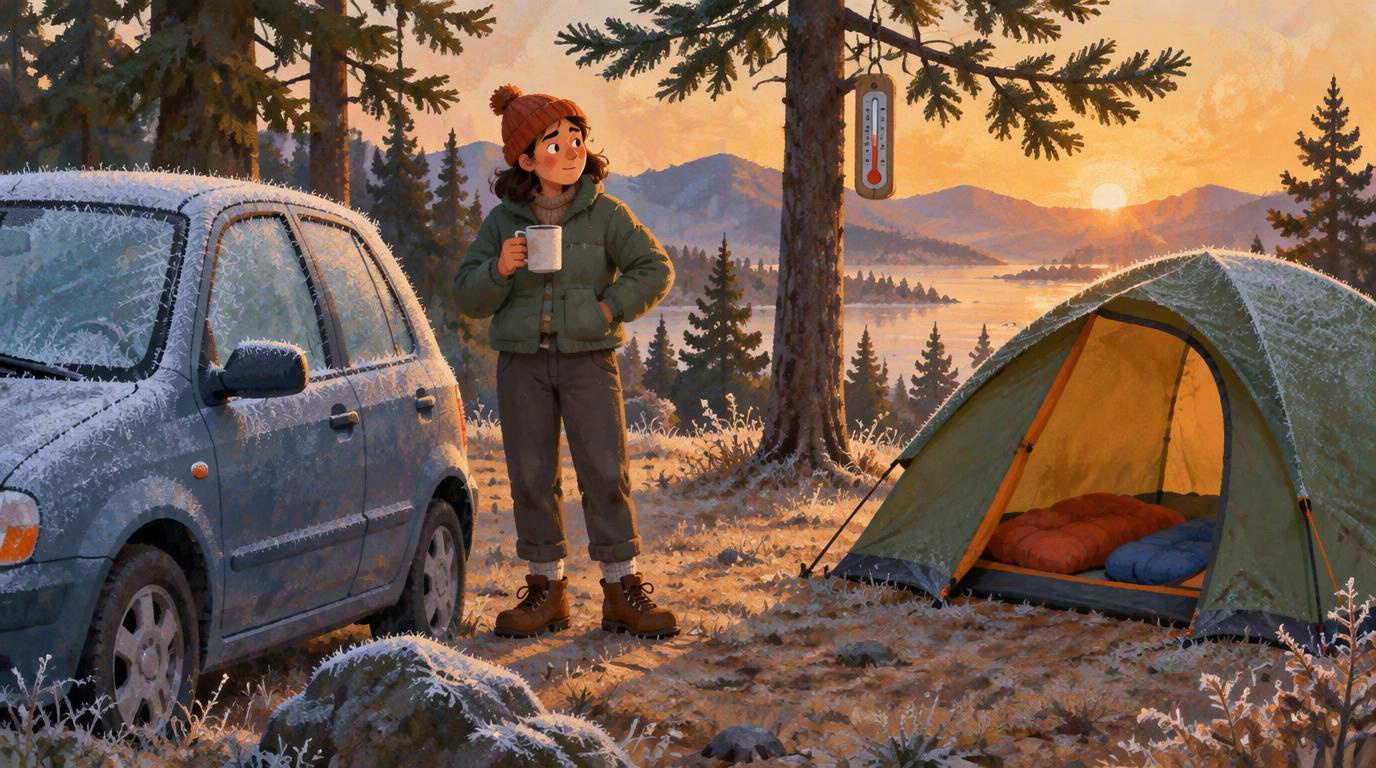
Not by much, and on a still, cold night often not at all. A parked car and a tent are both uninsulated shells. In the one measurement we could find, an unheated car sat anywhere from 2 to 24 degrees above the outside air at the coldest hour, depending on the night. A three-season tent runs about 5F above outside in most user reports. Unheated, the tent is usually the warmer place to lie, because single-pane glass and a steel shell lose heat faster than two layers of fabric, and a small tent has far less air for one body to warm. The car wins in wind, rain or wet snow, or once you have covered the glass. Either way, the pad under you and the bag around you decide the night, not the shelter.
What the thermometers say
The only overnight car data we could find is a small student project at the University of Oregon: one unmodified car, three sub-freezing nights. On the worst night the cabin fell from 43F at 10 pm to 26F by 2 am, 4.5 degrees an hour, and then tracked the 19F outside air at only 2 to 3 degrees above it until dawn. The two calmer nights held 16 and 24 degrees above outside at the coldest point. When the experimenter cracked a window at 4 am, the cabin dropped 7 degrees. One car over three nights is an illustration, not a law, but the spread is the lesson: a margin that runs from 2 degrees to 24 depending on conditions nobody controlled is not one you can plan a night around.
Tent figures are softer still. A roundup of user reports puts a three-season tent about 5F above outside, and one manufacturer test at 40F outside measured a three-season tent 1C warmer and a single-wall winter tent 4.5C warmer. So in the sleeping-in-car-vs-tent comparison, both shelters finish the night within a few degrees of the air outside.
Why glass and steel lose, and why a small tent wins
A car is a steel box with a lot of window. Single glazing is rated at roughly R-1 in building tables, and the steel body is a thermal bridge that conducts straight through. The glass also radiates to the night sky, which is why a clear, calm night is the worst case for a car. The door and roof panels trap a layer of air behind the lining and insulate better than the windows do, as the top answer on the Outdoors StackExchange thread about this question points out.
Then there is volume. A 2025 Honda Civic sedan lists 99.0 cubic feet of passenger space; a two-person tent encloses a fraction of that, with two skins and still air between them. One sleeper has to warm every cubic foot before the air rises a degree, so the small double-walled tent responds to body heat and the big single-glazed car does not.
This is also why people report car camping colder than a tent. By dawn the shell has radiated to the sky all night and its surfaces can be colder than the air; a van owner on the same thread says it “usually feels warmer outside the van than in it” when he gets up.
Off the ground is not the same as insulated
Being off the ground is the car’s one honest advantage, and it is smaller than it sounds. You are lying on a steel floor pan or folded seat frames, and steel pulls heat out of you at least as readily as cold ground does. The fix is the same in both shelters: a sleeping pad with enough R-value for the forecast, laid flat. Widths that fit between SUV wheel wells are in the car-camping mattress guide; the winter R-value rule is in car camping in winter without a heater.
A bag laid flat on a pad lofts fully; a bag twisted around a body on a half-folded seat is compressed exactly where you need the insulation. Several Quora answers that call the car colder are describing that: a cramped bag, not a cold shell.
When the car is the warmer choice
“Is it better to sleep in my car or in a tent” depends on the forecast.
| Tonight looks like | Sleep in | Why |
|---|---|---|
| Calm, clear and cold | The tent, or the car with every window covered | Bare glass radiates to the sky |
| Wind | The car | Fabric loses more to wind than steel does |
| Rain or wet snow | The car | A damp bag costs more than the shell does |
| A hot evening | The tent | An oven at dusk, fogged by morning |
| Two or more sleepers | Either | Shared heat shrinks the volume problem |
| Alone | The tent | One body cannot warm a carful of air |
For car camping vs tent in general, the car’s strengths are weather, security and setup time, not temperature.
Condensation is the car’s real problem
A resting adult gives off roughly a cup of water over a night through breath and skin, by the National Academies’ figures. In a sealed car it condenses on the coldest surfaces, the windows; the StackExchange answer that recommends the car warns to expect frost inside the glass by morning. The usual fix is a cracked window, and the Oregon measurement shows what it costs: 7 degrees the moment it opened. A double-wall tent vents the same moisture through the gap between inner and fly and loses less for it. Venting a car without a hatch is its own problem; the sedan guide covers rain guards and which window to open.
The engine and the heater
Heating the car changes the answer and brings a risk, so here is the agency guidance, plainly and not as medical advice. The CDC says not to sit in a parked vehicle with the engine running unless a window is open, and to clear snow from the exhaust pipe before starting it. The reason is on record: after the January 1996 blizzard the CDC documented 25 carbon monoxide poisonings and two deaths, all in idling cars whose tailpipes were blocked by snow. The gas is colorless and odorless; the CPSC calls it “the Invisible Killer”.
Portable propane heaters do not change this. The Mr. Heater Portable Buddy manual lists tents, truck caps and vans as the enclosures it may be used in, and says in capitals: never operate the heater while sleeping. A passenger car is not on its list. The “warm it up, then switch off” habit campers describe is only defensible awake, with a clear tailpipe and a window open; this page does not recommend it. A battery CO alarm is a reasonable precaution either way; the winter guide linked above names one.
Making the car as warm as the tent, or the tent as sheltered as the car
Most of the car’s deficit is glass, so most of the fix is covering it: cut panels from reflective foil insulation or wedge foam pads against the windows. Hang a blanket behind the front seats to shrink the space you are heating, put a real pad on the floor rather than the seats, and sleep in dry clothes. The emergency version, from the StackExchange thread’s top-voted answer, is to pitch the tent over the car so its fabric covers the glass; that is for a breakdown at minus 30, not a campsite.
The reverse trick is simpler: park the car windward and pitch the tent in its lee, so the steel takes the wind and the fabric keeps the still air. The full recipe for a cold night in a vehicle is in car camping in winter without a heater; if you are still deciding where to sleep at all, start with the car camping basics.
Questions people also ask
Is car camping colder than a tent?
Unheated on a calm night, by a few degrees, yes. Cover the windows and most of the difference disappears; in wind or rain the car is the warmer and drier of the two.
How do people who sleep in their cars stay warm?
The same way tent campers do: a winter-rated pad, a bag rated for the forecast, covered glass, dry clothes, and one window cracked for moisture. Nobody doing it safely is running the engine.
Can you sleep in a car overnight in winter?
Yes, unheated, with the right pad and bag. Plan for the outside temperature, not the cabin’s starting warmth, and expect frost inside the glass by morning.
Where can I legally sleep in my car?
Paid campsites, yes. Trailheads, usually. Rest areas vary by state; private lots generally prohibit it. Check the posted rules; this is not legal advice.