Best Hiking Backpack for Petite Women: Fit by Torso
Petite means a torso under about 16 inches, not a height. Osprey, Gregory and Deuter each make a women's size that starts at 13.5 to 14 inches; here is what fits.
Updated
Topic
Packs, bags, pads and boots for women and for short, tall or plus-size bodies: torso lengths, hip belts, sleeping bag girth and what actually fits.
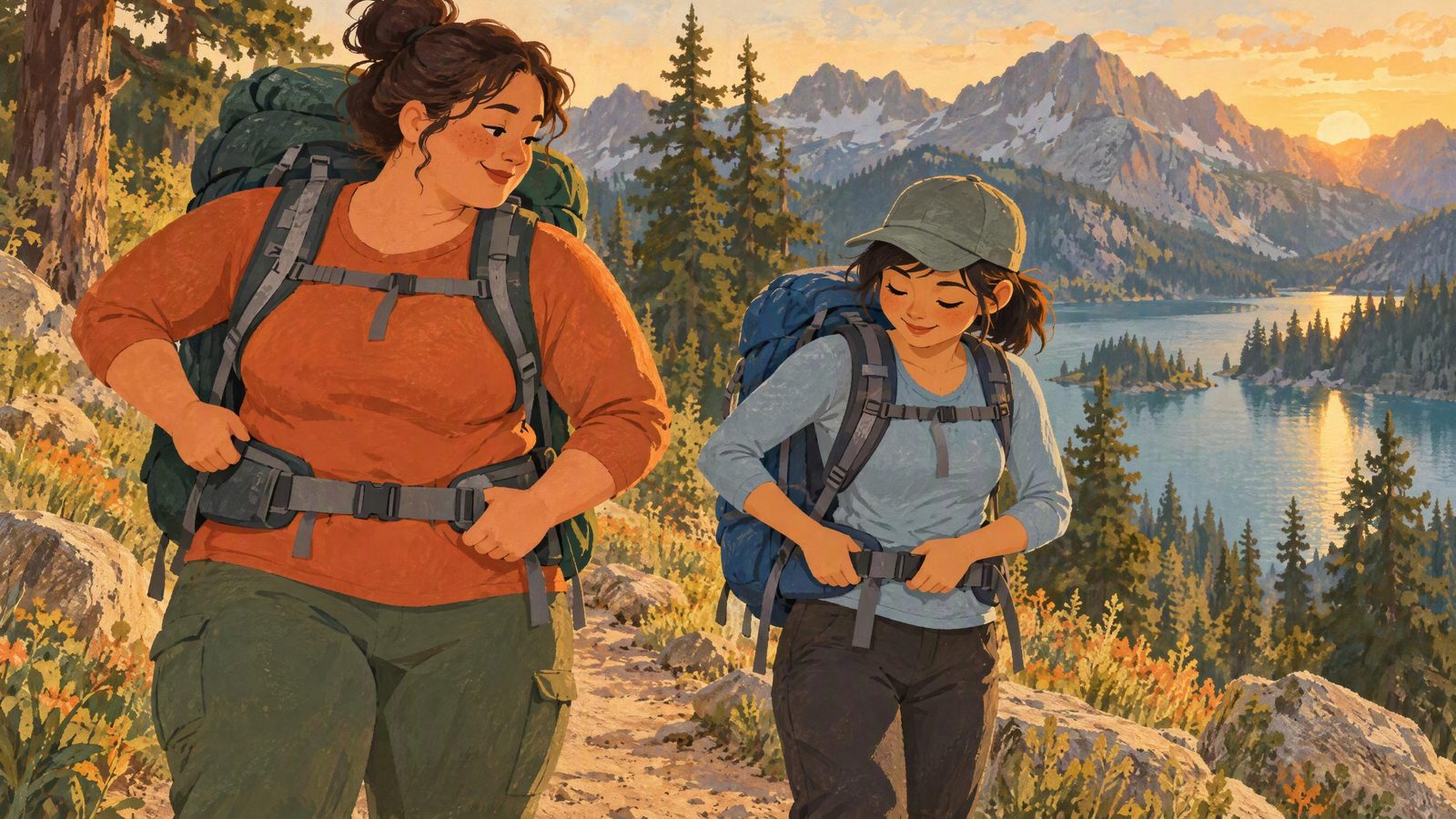
Petite means a torso under about 16 inches, not a height. Osprey, Gregory and Deuter each make a women's size that starts at 13.5 to 14 inches; here is what fits.
Updated
Plus-size hiking packs need a hip belt that closes past 50 inches. Gregory Plus (to 60 in) and Osprey Extended Fit (to 70 in) do; here are the numbers to check.
Updated
The best women's hiking backpack is the one whose torso range holds your measurement and whose hip belt closes with webbing to spare. Here is how to find both numbers.
Updated
Most packs are only bladder-compatible. The Osprey Mira 22 (2.5 L) and Gregory Juno 24 H2O (3 L) ship with the reservoir and a women's harness; here is how they fit.
Updated
Three hiking pants cut on a real plus pattern with published charts: Outdoor Research Ferrosi Plus, Columbia Saturday Trail II Plus and Eddie Bauer Guide Pro, 16W to 24W.
Updated
The spec that decides fit is shoulder girth, not the women's label. Standard women's bags run about 60 inches; plus-size bodies need 66 to 80. The bags that get there.
Updated
A women's 15-degree bag is rated on comfort, so it is warmer than a men's 15. Shop by the ISO comfort number: 15 to 17F for nights in the 20s, lower for anything colder.
Updated
Standard pads are 20 inches wide. Plus-size campers should start at 25 and go to 30 for side sleeping, with 3 inches of thickness and an R-value matched to the season.
Updated