Camping With a Baby in Cold Weather: Layers and Sleep
Keep a baby warm camping with a foam pad under the crib, a wool or fleece base layer, footed fleece and a cold-rated wearable sleep bag. No loose blankets, no shared bag.
Updated
Topic
Camping and hiking gear for babies, toddlers and kids by age band, plus child carrier packs: what to bring, what to skip and how long each piece lasts before they outgrow it.
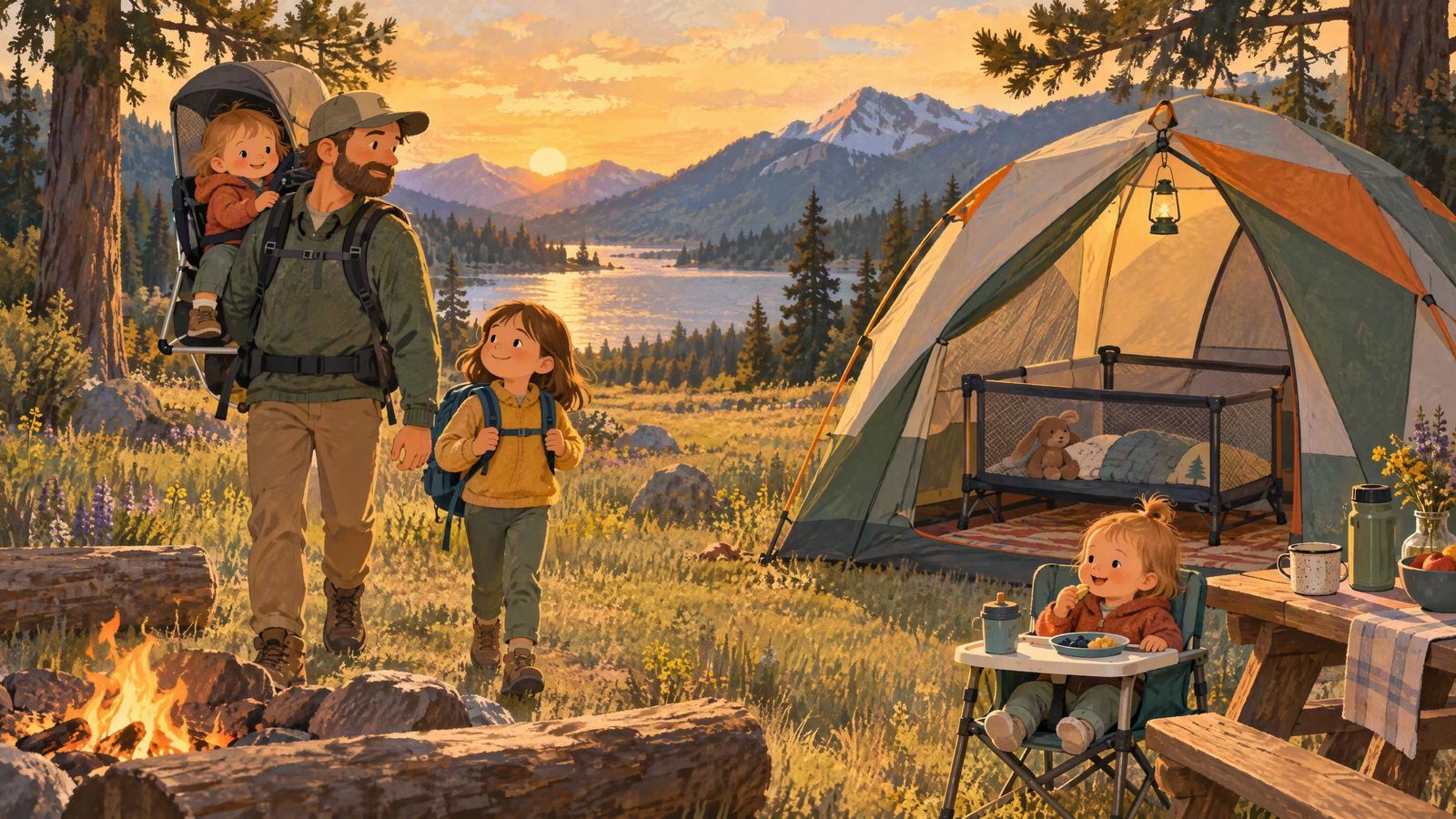
Keep a baby warm camping with a foam pad under the crib, a wool or fleece base layer, footed fleece and a cold-rated wearable sleep bag. No loose blankets, no shared bag.
Updated
A kids' camping cot should sit under 12 inches off the ground, hold 75 lb or more, and fit the tent with room to walk. Under 4 and rolling? Mesh sides, or stay on a pad.
Updated
What a child actually needs to camp at 3 to 5, 4 to 8, and 8 to 12, what can wait, and the handful of items where buying the kid-sized version matters.
Updated
A baby camping sleeps as at home: on their back, alone, on a firm flat surface. In practice that is a travel crib on the tent floor with a foam pad under it.
Updated
A framed child carrier works once a baby sits unassisted, about 6 months, up to roughly 40 lb. The four below fit torsos down to 15 inches, covering most petite wearers.
Updated
Kids' hiking pack sizes by age: 6 to 8 liters at 4 to 6, 10 to 18 liters at 6 to 8, 25 to 38 liters with an adjustable torso at 8 to 12. Fit by torso length, not age.
Updated
For nights near freezing a child needs a bag rated 15 to 20F, sized within 6 inches of their height, on a pad with R-value 3 or more. Four bags that qualify.
Updated
A toddler camping chair with a tray needs a harness, a weight limit above your child, and feet that sit flat on grass. Four chairs covering 6 months to 75 lb.
Updated